Rev. Jesse Jackson dies at 84; examining his longstanding connections to Louisville and Kentucky civic life
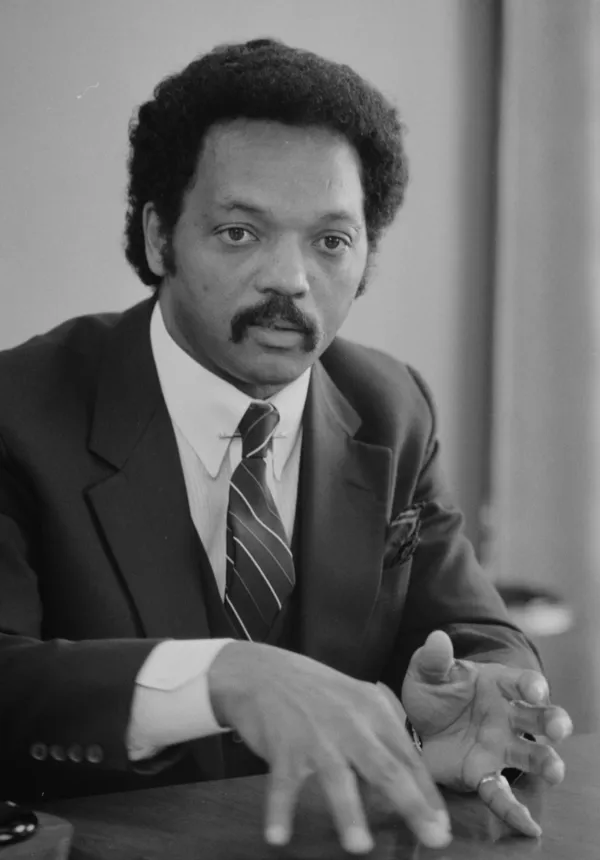
A national civil-rights figure with local points of contact
Rev. Jesse L. Jackson, a Baptist minister and one of the most prominent U.S. civil-rights leaders of the post-1960s era, died Tuesday, Feb. 17, 2026, at age 84. He died at home in Chicago surrounded by family after years of serious health challenges that included a rare neurodegenerative disorder.
Jackson’s public life spanned organizing, electoral politics and international advocacy. He emerged from the civil-rights movement as a close associate of Rev. Martin Luther King Jr., later building his own base through Chicago activism and eventually launching two campaigns for the Democratic presidential nomination in 1984 and 1988. He founded what became the Rainbow PUSH Coalition, an organization that blended civil-rights advocacy with economic and political organizing.
Kentucky appearances and a moment tied to Louisville basketball history
While Jackson’s career was centered in national politics and Chicago-based organizing, Kentucky periodically served as a stage for his work and public presence, including events that intersected with Louisville’s major civic institutions.
One of the most documented Kentucky appearances involving the University of Louisville came during the 2013 NCAA men’s basketball tournament. Jackson traveled to Lexington to support North Carolina A&T State University—his alma mater—and accompanied the team on game day, led a pregame prayer, and addressed players afterward following a loss to top-seeded Louisville.
Why Louisville mattered in Jackson’s broader political map
Louisville and Jefferson County occupy a distinct place in Kentucky’s modern political geography: as the state’s largest city, the area has long served as a center of Black civic life, labor activity, and Democratic organizing. Those dynamics were central to Jackson’s national strategy in the 1980s as he sought to expand coalition politics and increase voter participation while campaigning for the Democratic nomination.
Jackson’s two presidential runs also established a model—mobilizing voters across race, class and faith communities—that later influenced the shape of national Democratic primaries. His campaigns sought to increase turnout and build durable participation among constituencies that were often underrepresented in party decision-making.
Legacy themes that resonated locally
Economic justice and access to jobs, a long-running focus of Jackson’s advocacy through his organizing work.
Voting rights and political participation, issues that frequently intersect with Louisville’s history of civil-rights activism and civic mobilization.
Faith-based organizing, reflecting the continuing role of churches and clergy in Louisville’s civic life.
Jackson’s public career combined movement leadership, electoral politics and high-profile advocacy that repeatedly brought national civil-rights debates into local and regional arenas.
Details on public memorial events and formal services were expected to be released by the organization he led. Jackson is survived by his wife, Jacqueline, and his children.