Southbound I-71 traffic stalls near Frankfort Avenue after semi becomes stuck, disrupting Louisville commute
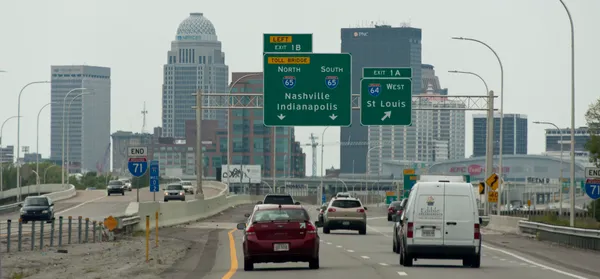
Incident triggers delays near a key downtown interchange
Traffic slowed to a crawl on southbound Interstate 71 near the Frankfort Avenue interchange in Louisville after a semi-truck became stuck and blocked travel lanes, creating backups for drivers approaching the downtown riverfront corridor. The location sits close to the I-64/I-65/I-71 network where volumes are high and even short-duration lane blockages can quickly cascade into broader congestion.
The immediate impact was a standstill or stop-and-go flow on the southbound side, with delays extending beyond the incident scene as drivers merged around the obstruction. The Frankfort Avenue area is one of the primary access points between I-71 and neighborhoods east of downtown, and it also functions as a diversion route when interstate traffic is constrained.
How a “stuck” tractor-trailer can paralyze interstate flow
A tractor-trailer can become “stuck” in several ways on limited-access roadways: mechanical failure, a trailer hung up on pavement transitions, loss of traction on grades or curves, or positioning that prevents safe clearance without heavy-duty recovery equipment. In each scenario, the operational challenge is less about the truck’s speed and more about lane geometry and safety buffers needed for responders to work.
Lane blockage: A single blocked lane near an interchange can trigger rapid queue growth as traffic volumes exceed remaining lane capacity.
Merge conflicts: Sudden merges compress following distances and increase crash risk, often forcing additional temporary restrictions.
Recovery complexity: Large vehicles may require specialized tow units, coordination to protect responders, and staged traffic control.
What drivers typically experience during clearance operations
In similar interstate events involving disabled or immobilized semi-trucks, clearance usually proceeds in phases: securing the scene, establishing lane control, positioning heavy recovery vehicles, moving the tractor-trailer to a shoulder or safe area, and then restoring full lane access. Travel times can remain elevated after reopening as the queue dissipates.
Even after lanes reopen, the delay can persist as the stop-and-go wave moves downstream and volumes normalize.
Practical steps for motorists navigating the corridor
Drivers approaching downtown Louisville during interstate disruptions near Frankfort Avenue generally benefit from earlier decisions rather than last-second lane changes. Options often include shifting to alternate riverfront routes or using nearby arterial streets, while allowing extra time for merging traffic near interchanges.
Motorists are urged to slow down well in advance of visible brake lights, maintain spacing in merge areas, and follow posted instructions from roadway message signs and on-scene personnel until traffic flow fully stabilizes.