Louisville’s ‘No Kings’ protest brings downtown crowd as nationwide demonstrations target Trump administration policies
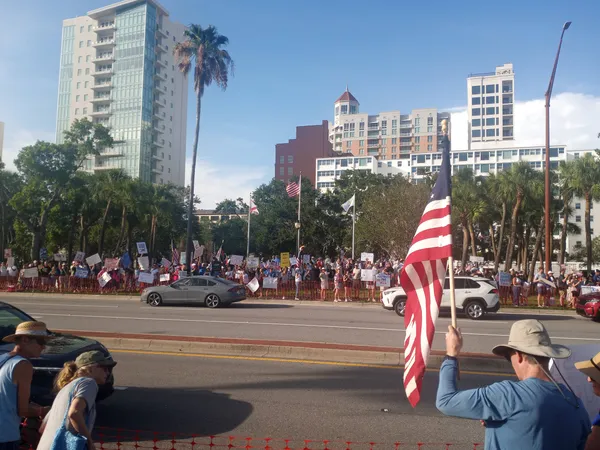
Crowd gathers near Metro Hall as local event aligns with coordinated national day of action
A crowd gathered in downtown Louisville on Saturday, March 28, for a “No Kings” protest, part of a wider, coordinated series of demonstrations held the same day in cities across the United States and in some overseas locations. Participants assembled near Louisville Metro Hall, where public sidewalks and nearby streets provided space for signs, speeches, and movement through the downtown area.
The “No Kings” label has been used by organizers and participants to frame opposition to what they describe as anti-democratic governance and expanded executive power. In 2026, the protests have also centered on federal immigration enforcement practices and broader national issues, including foreign policy and civil-rights disputes, which have appeared repeatedly in public messaging around the day’s events.
What the demonstrations are calling attention to
Across the country, the March 28 events have been described by organizers as a large-scale mobilization, with thousands of local rallies registered nationwide. While turnout estimates and local crowd sizes vary by city, the coordinated approach has produced simultaneous gatherings in state capitals, major downtown districts, and smaller communities.
In Louisville, the location near Metro Hall placed the event adjacent to city government offices and a traditional staging point for civic demonstrations. Participants carried placards and chanted slogans associated with the “No Kings” theme, a framing that emphasizes constitutional limits on power and the role of elections, courts, and civil liberties.
Louisville context: public safety planning and downtown impacts
Downtown demonstrations in Louisville in recent years have prompted heightened attention to traffic flow, police posture, and public safety coordination. With the city still shaped by the legacy of large-scale demonstrations in 2020, recent protest planning has focused on crowd management practices and minimizing confrontations while protecting the right to assemble.
As with many downtown events, the practical effects include intermittent street congestion, redirected pedestrian routes near gathering points, and heightened presence of public-safety personnel in the immediate vicinity. Organizers of similar Louisville events have typically encouraged participants to keep to sidewalks where possible, follow local instructions regarding street crossings, and prioritize de-escalation in interactions with counterprotesters or passersby.
How the ‘No Kings’ movement fits into a larger national pattern
The March 28 mobilization represents the latest wave in a sequence of “No Kings” demonstrations that emerged during President Donald Trump’s second term. Earlier iterations in 2025 drew large crowds in multiple states, helping establish a repeatable model: a common name, a shared day of action, and decentralized local organization.
Local events are organized city-by-city, often with different speakers and routes, but linked by shared messaging.
Common grievances highlighted nationally include immigration enforcement actions, concerns about executive authority, and disputes over civil-rights policy.
Organizers have described the actions as peaceful demonstrations and have promoted training on protest rights and safety in advance of major dates.
Saturday’s Louisville gathering unfolded as part of a nationwide day of protests that organizers said included thousands of registered events across all 50 states.
As the day concluded, Louisville officials and organizers faced the familiar test for large civic gatherings downtown: balancing public order and traffic needs with residents’ constitutional right to protest and assemble.