Louisville TARC riders face risky commutes as snow-covered sidewalks and bus stops remain difficult to access
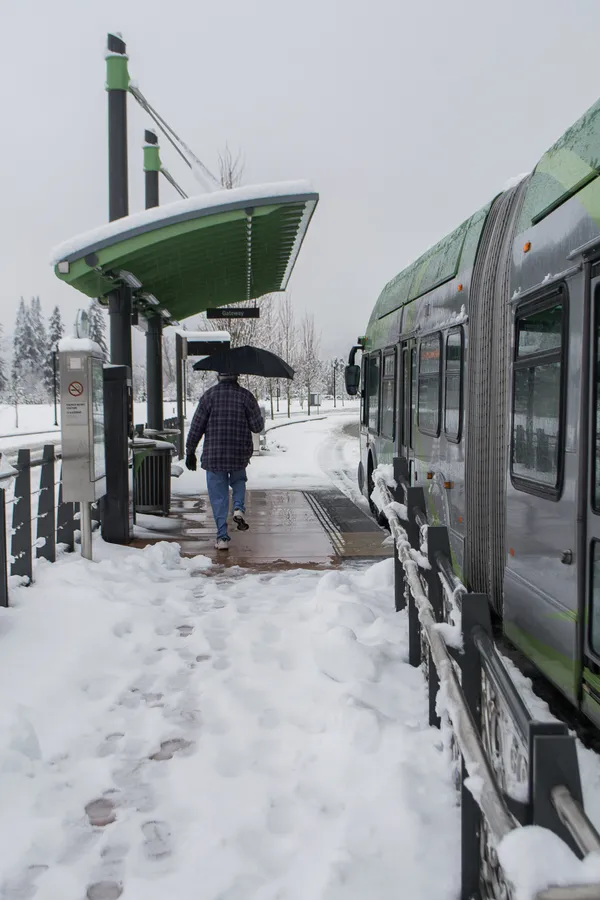
Snow and ice shift the burden from roads to the “last few feet” of transit access
As Louisville continues to work through winter weather impacts, TARC riders are reporting that the hardest part of a trip is no longer the bus ride itself, but reaching and waiting at bus stops safely. Snow-packed sidewalks and uncleared curb areas have pushed some riders into traffic lanes, while others describe waiting on uneven, slushy surfaces that can soak footwear and increase the risk of slips.
Riders say conditions around stops can create practical obstacles: stepping over plowed piles, standing in deep snow for extended waits, and trying to remain visible to drivers and approaching buses. In some cases, riders report that if they cannot stand close to the marked stop because of snow, they worry a bus may pass without recognizing they are waiting.
What responsibility is citywide—and what is not
City leadership has emphasized that major snow routes have been treated and that crews prioritize key corridors, including areas serving hospitals, schools, public transit routes and major employment centers. Officials have also reiterated that not every neighborhood street will be cleared quickly and that smaller roads may remain difficult until temperatures rise and melting accelerates.
Sidewalk clearing, however, operates under a different framework than roadway plowing. Local rules generally place responsibility for sidewalk removal on the adjacent property owner. For riders, that can mean a patchwork of cleared and uncleared segments on the same trip to a bus stop, with conditions changing block by block.
TARC service continuity vs. stop accessibility
TARC has continued operating during the aftermath of the storm, including activating winter weather detours on select routes when conditions require it. The transit agency has also pointed riders to official communication channels for real-time service changes. Even when buses are running, riders describe the “first and last steps” of the trip—walking to a stop, boarding from a cleared area, and standing safely while waiting—as the most vulnerable points.
TARC officials have noted that sidewalk snow removal is outside the agency’s authority and resources, a division that can leave riders facing hazardous conditions even when transit operations are stabilized.
Key issues riders say need immediate attention
- Snow berms and slush at curb lines that limit access to stops and boarding areas.
- Uncleared sidewalks that force pedestrians into the street near fast-moving vehicles.
- Longer waits during detours or weather recovery, increasing exposure to cold and wet conditions.
For riders, the safety challenge often begins before the bus arrives—navigating sidewalks that may be passable in one stretch and impassable in the next.
With winter weather expected to continue affecting mobility throughout the season, the situation highlights a persistent gap between road clearance and pedestrian access—one that disproportionately affects residents who rely on public transit for work, healthcare and daily needs.