Louisville council proposal would require public disclosure of Flock license-plate reader camera locations citywide
A transparency push collides with law-enforcement security concerns
A Louisville Metro Council member has proposed legislation that would require the city to publicly disclose where Flock Safety automated license plate reader cameras are installed. The proposal arrives as the city’s network of fixed license-plate readers expands and as public-records disputes over surveillance details continue in Kentucky.
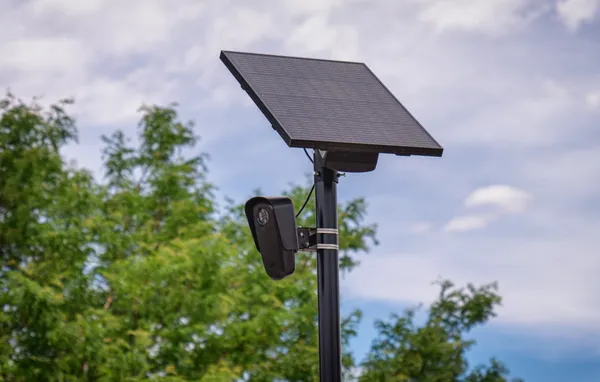
Flock cameras are solar-powered, fixed readers that capture images of passing vehicles and convert license plates into searchable data. Systems typically record plate numbers along with metadata such as date, time and location and may also log vehicle characteristics like make, model and color. The technology is used to generate alerts tied to investigative “hot lists,” including stolen vehicles and other law-enforcement entries.
What the proposal would change
The proposed ordinance would create a legal requirement for Louisville Metro Government to make camera placement information available to the public—shifting location disclosure from an agency-by-agency or case-by-case decision into a citywide transparency standard.
In practice, such a requirement would likely affect not only city-owned devices but also how the public understands the broader ecosystem of readers accessible to Louisville Metro Police, including cameras operated by other local jurisdictions and participating entities that share data through interconnected platforms.
How the issue reached Metro Council
The legislation is being introduced against a backdrop of escalating debate over what surveillance records must be released under Kentucky’s Open Records Act. In recent months, disputes involving Louisville Metro Government, police officials and requesters have centered on whether providing camera-location information is required, whether the information can be withheld due to administrative burden, and whether public release could undermine operational effectiveness.
Those legal conflicts have included attorney general review and subsequent court challenges over records tied to surveillance infrastructure—indicating that transparency questions are no longer confined to policy discussions but are increasingly being tested through formal legal channels.
Public safety, privacy and accountability questions
Supporters of disclosure generally argue that residents should be able to understand where and how surveillance is deployed in public space, particularly when the system collects data on large volumes of drivers not suspected of wrongdoing. Civil-liberties concerns have focused on the scale of collection, retention practices, auditing of searches, and the extent of data sharing with agencies outside Louisville.
Opponents of publishing locations often argue that public maps could allow offenders to route around cameras, diminishing the cameras’ deterrent and investigative value. They also raise concerns that disclosure could expose certain sites—such as near sensitive facilities—to heightened tampering risks.
Key facts likely to shape the debate
- The city’s fixed Flock network has expanded rapidly in recent years, and police access can extend beyond devices owned directly by Louisville Metro.
- Records disputes have already produced formal legal interpretations and litigation over whether parts of the city’s surveillance footprint must be disclosed.
- Separate from location transparency, oversight questions include who can search the database, what documentation is required for searches, how long data is retained, and what agencies receive shared access.
As the measure advances, Metro Council deliberations are expected to focus on whether the public interest in transparency can be met without materially reducing the cameras’ effectiveness as a tool for investigating and deterring crime.
The proposal is expected to be assigned to the appropriate Metro Council committee for review, where amendments, compliance timelines and the exact scope of required disclosures could be negotiated before any final vote.