Kentucky Transportation Cabinet designs Clark Memorial Bridge safety work, reviewing permanent three-lane configuration option
Lane reduction concept emerges as state begins new safety-focused design phase
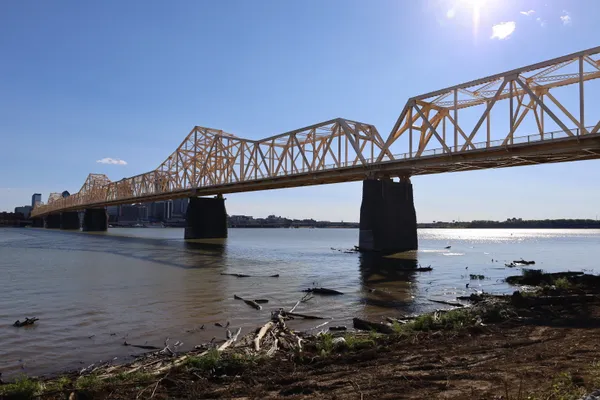
State transportation officials have begun designing a project aimed at improving safety and extending the service life of the George Rogers Clark Memorial Bridge, the Ohio River crossing commonly known as Louisville’s Second Street Bridge. The bridge links downtown Louisville with Jeffersonville, Indiana, and carries U.S. 31.
As part of the early design work, engineers are evaluating a concept that would permanently reduce the bridge from four travel lanes to three, configured as two northbound lanes and one southbound lane. The stated objective is to reduce crashes and improve traffic flow by allowing wider travel lanes than the current layout.
Project scope centers on steel repairs and operational changes
The design effort is framed around two parallel goals: repairing steel components to maintain structural integrity and reconsidering how traffic moves across the bridge for drivers, pedestrians and cyclists. Officials have described the approach as an opportunity to coordinate needed maintenance with safety and operational improvements, rather than addressing them as separate initiatives.
While the lane-reduction concept is under review, the state has not released final engineering plans, a construction schedule, or a cost estimate. Officials have said additional details will be provided as the design work advances and coordination continues with local agencies.
Recent restrictions and recurring incidents add urgency
The bridge has been subject to heightened attention in recent years due to safety and maintenance concerns. Weight-limit restrictions were put in place after inspections found deterioration had progressed to a level requiring limits intended to reduce stress on the structure. The bridge has also seen periodic closures and disruptions tied to crashes and operational adjustments near the Louisville approach, underscoring its importance—and sensitivity—to regional traffic patterns.
What a three-lane setup could change
Transportation engineers typically evaluate lane configuration changes through a combination of crash history, traffic volumes, turning and merging movements at each end of the bridge, and the operational constraints of a narrow structure. In this case, the concept under review would create:
- Two northbound lanes, potentially supporting peak-direction demand toward Indiana.
- One southbound lane, which would require careful analysis of backups during rush periods and during incidents.
- Wider lanes than the current four-lane arrangement, intended to reduce side-swipe risk and improve driver comfort.
Key outstanding questions include how the new configuration would handle peak commuting surges, emergency response access, and the interplay with nearby downtown intersections and ramps on both sides of the river.
Next steps
State officials have said engineers will continue evaluating bridge conditions and refining options while coordinating with local partners. For now, the three-lane concept remains one of the configurations under consideration, with final decisions expected only after further design development and public communication on scope and timeline.