Greenberg outlines Louisville snow cleanup plan as crews salt, plow, and track progress on priority routes
City focuses on priority corridors as winter conditions persist
Louisville Metro’s snow response remains centered on keeping the region’s designated priority network passable while crews continue round-the-clock operations during sustained winter weather. Mayor Craig Greenberg used a morning television appearance to reiterate the city’s operational focus: repeated treatments on main routes, continued plowing where accumulation warrants it, and public updates aimed at helping residents understand what roads can reasonably be addressed first.
Louisville Metro’s snow plan is built around a defined set of routes rather than full coverage of every neighborhood street. The Metro Snow Team is responsible for about 2,750 miles of roadway organized into 111 routes, prioritized to connect major employment areas, schools, hospitals, emergency services, and high-traffic corridors. Roads outside that network—including many neighborhood streets—are generally not plowed or treated by Metro crews as part of standard operations.
How treatment decisions are made
Louisville Metro’s strategy relies on multiple stages, including pretreatment with brine when conditions allow, salting trouble spots such as bridges and overpasses, and full-route salting when lighter accumulations create slick conditions. Once snow depth exceeds roughly two inches, plowing begins on the designated network, with crews often needing multiple passes to keep routes functional when snow continues to fall and temperatures remain below freezing.
The city’s public guidance emphasizes limiting travel when possible to reduce crashes and allow equipment to work more efficiently, particularly during active snowfall when cleared lanes can quickly refreeze or become covered again.
Scale of resources and recent upgrades
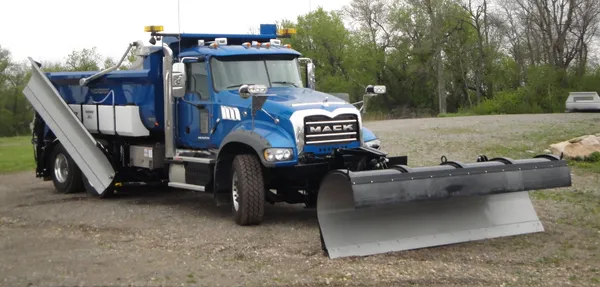
Louisville Metro’s snow operations involve more than 200 staff members drawn from multiple departments, including Public Works and Parks and Recreation, along with supporting functions such as fleet and codes-related staff. Entering the 2025–2026 winter season, the city reported a snow-fighting fleet of more than 100 vehicles and a salt supply exceeding 32,000 tons. Recent capital upgrades have included additional tandem-axle dump trucks, new brine tank replacements across the city, and plow improvements designed to reduce curb and pavement-edge damage while increasing blade durability.
What residents can track—and how to report problems
Louisville Metro continues to direct residents to use the city’s Snow Map to check whether a roadway is part of the designated snow-route system and to monitor when routes were last treated or plowed. The city also notes that a “plowed” status does not necessarily mean pavement is clear or dry, particularly during ongoing snowfall.
- Use the Snow Map to confirm whether a street is included on a Metro snow route.
- Report untreated or deteriorating conditions on designated routes through Metro311.
- Exercise additional caution on bridges and overpasses, which can freeze faster than surrounding pavement.
Louisville Metro’s approach prioritizes keeping key connectors and high-volume roads functional first, while acknowledging that many residential streets fall outside the city’s routine snow-route coverage.
As conditions evolve, the city has signaled that repeat treatments and continued plowing will remain the core tactics, with public reporting and route-tracking tools intended to help target trouble areas on the priority network.